
Why Reframed?
Reframed artworks are the best looking art you can put on a TV. Every piece fills the screen edge to edge, with nothing cropped away and no black bars. Here is what that takes.
Paintings are not TV-shaped
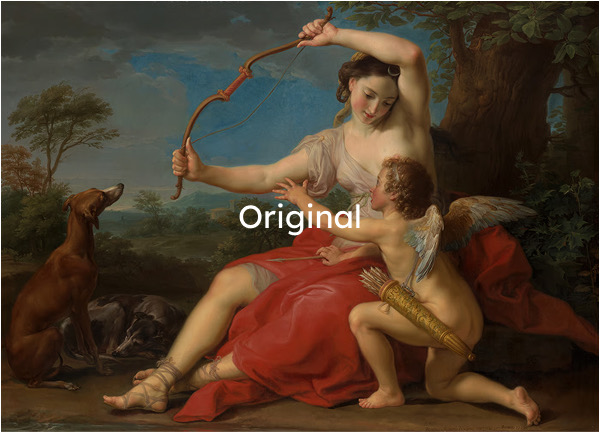
Most paintings are close to a square. A TV is wide. So a painting never fits the screen.
Fill the screen, and you cut the painting
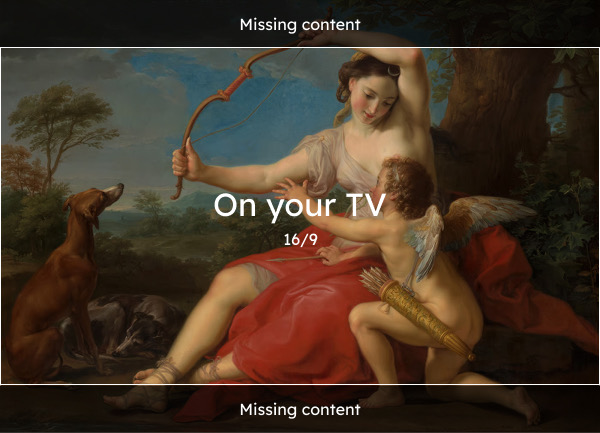
To reach both edges of a wide screen, the picture has to be enlarged until the top and bottom fall off it. Everything in the dark bands is gone.
Keep all of it, and you get black bars
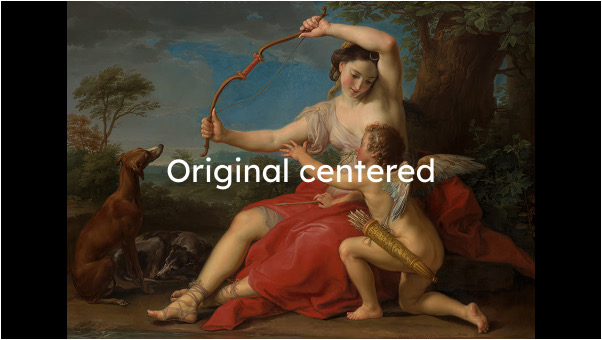
Shrink the painting until it fits instead, and nothing is lost, but the art is smaller and part of the screen is left black.
Reframed does neither
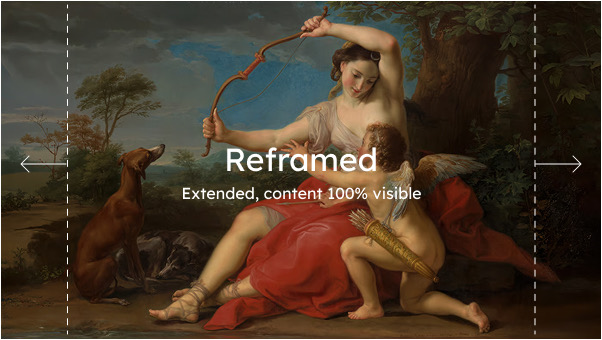
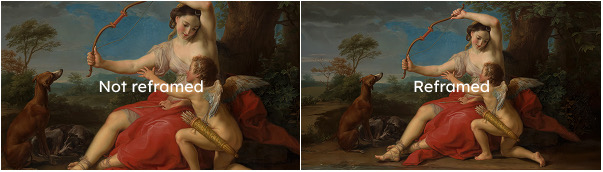
Each painting is extended by hand, in the style of the original, until it is TV-shaped. Every part of the original is still there, and it fills the whole screen.
Not every painting needs extending
Some artworks are already close to TV-shaped. Those need only a light edit rather than a full extension. The result is the same either way: nothing from the original is missing, and the screen is full.
The painting on this page is Diana and Cupid by Pompeo Batoni.